
Thank you for writing to us. One of our executive will reach back to you through your submitted medium. In case there’s an urgency, feel free to connect over WhatsApp for faster response.
Prefer calling? Dial +9108048036861 (International callers) or 08048036861 (Indian callers).
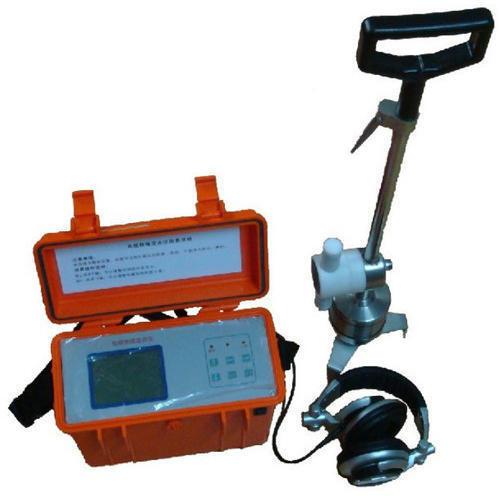
Cable fault locators use different techniques to detect issues. A common method is Time Domain Reflectometry (TDR), which sends a signal down the cable and measures the time it takes for the reflection to return. The device can identify the location of a fault based on the characteristics of this reflection.
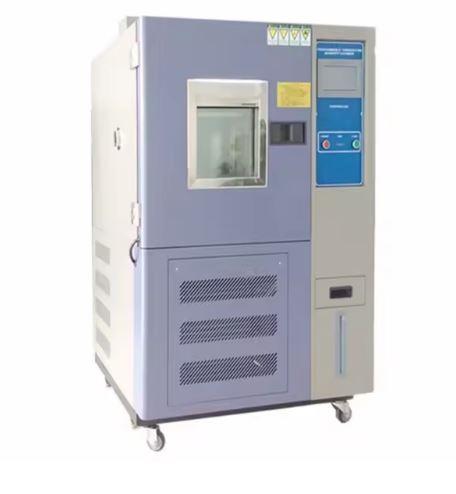
An environmental test chamber is an apparatus used to simulate a variety of environmental conditions to test the performance, reliability, and durability of products. The equipment pictured is a temperature and humidity test chamber, a common type of environmental chamber.
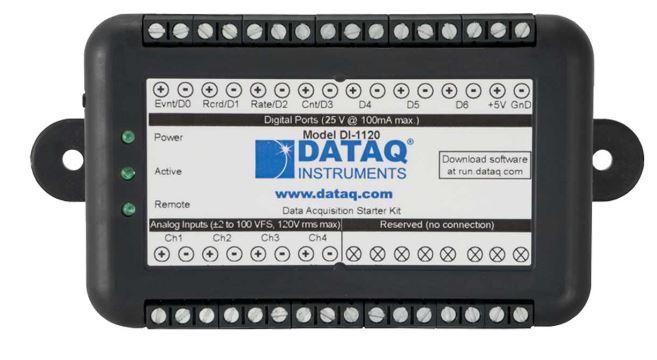
The data logger DI-1100 comes with downloadable WinDaq software, which allows for real-time data acquisition, playback, and analysis. The software can stream acquired data to a disk and export it to applications like Microsoft Excel. The device is an updated replacement for the DI-145 model and is suitable for measuring preamplified analog signals.
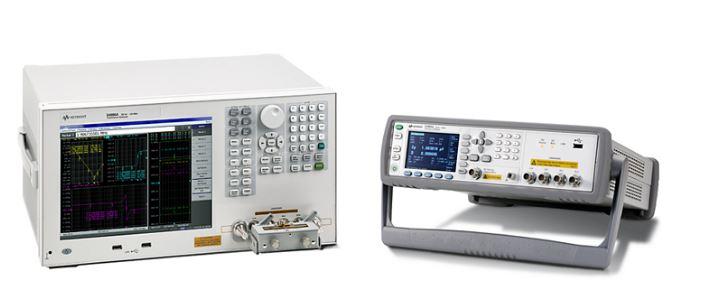
LCR meters, impedance analyzers, and capacitance meters are all electronic test instruments used for measuring the properties of components, but they differ in their scope and complexity. A capacitance meter is the most specialized, designed to measure only capacitance, while an LCR meter measures inductance (L), capacitance (C), and resistance (R) at fixed or limited frequencies. An impedance analyzer is the most versatile, as it measures complex impedance across a broad, continuous range of frequencies and displays the results graphically, making it suitable for detailed analysis and advanced characterisation of components and materials.
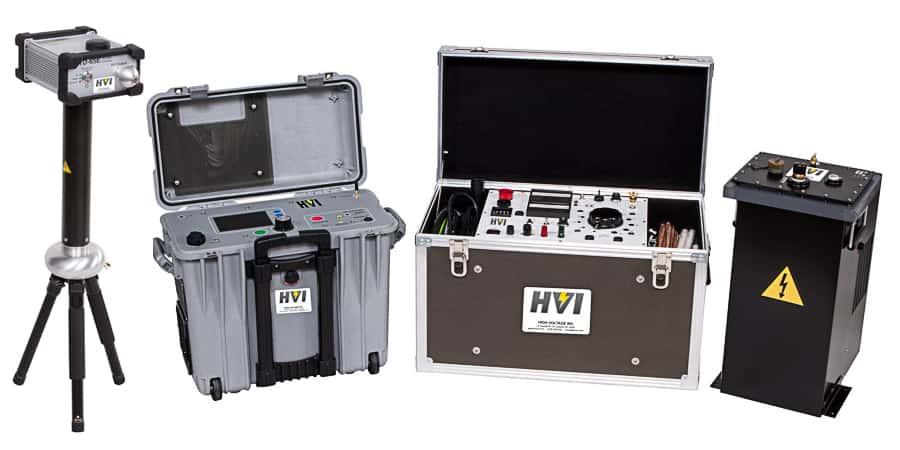
VLF AC technology refers to Very Low Frequency alternating current, which is used in high-voltage testing equipment. A VLF hipot is an AC output tester with an output frequency of 0.1 Hz or lower, as opposed to the standard 50/60 Hz. The equipment in the image is a VLF AC hipot from the manufacturer High Voltage Inc. (HVI). These testers are used for performing AC over-voltage withstand tests on high-voltage apparatus like cables, switchgear, circuit breakers, and other electrical components.
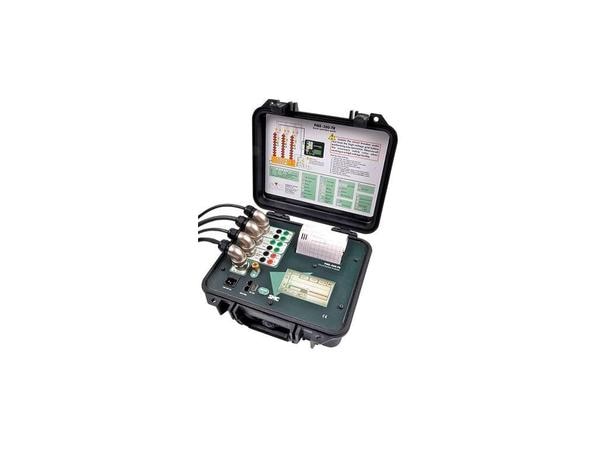
A transformer demagnetizer is an automatic instrument designed to demagnetize the magnetic core of single and three-phase transformers. Demagnetization is necessary after a DC current test, such as a winding resistance measurement, because the magnetic core may become magnetized (remnant flux). This remnant flux can cause potential problems like inaccurate measurements or inrush current when the transformer is started up.
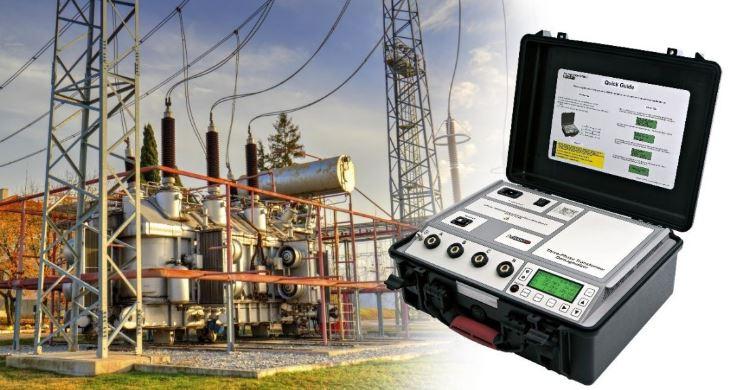
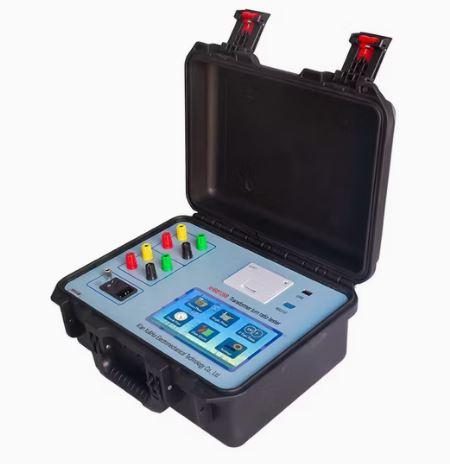
The device is a JYT-F transformer turns ratio tester, a model designed for testing various types of transformers, including power transformers, current transformers (CTs), voltage transformers (PTs), and Z-connection transformers.
A circuit breaker analyzer and timer is a specialized piece of test equipment used to assess the condition of circuit breakers. It performs various tests to ensure the breaker is operating correctly, safely, and within its specifications.
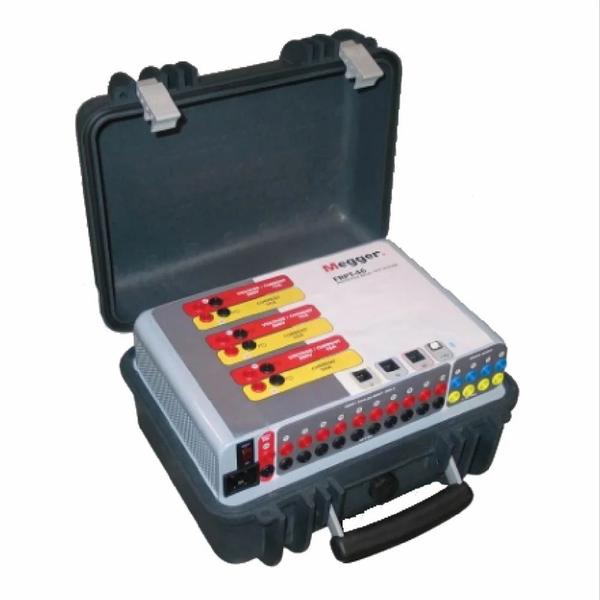
The device is a Megger SMRT33 smart protective relay test system. It is a compact, portable, and multi-phase relay tester used for testing a variety of protective relays, including electromechanical, solid-state, and microprocessor-based relays [1, 2].
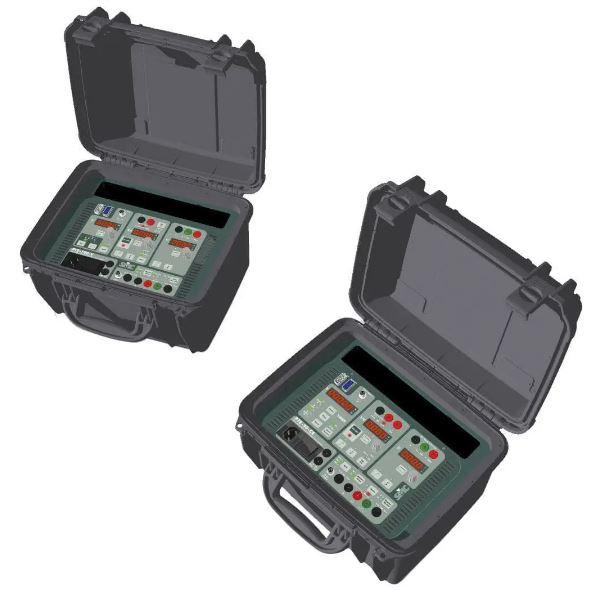
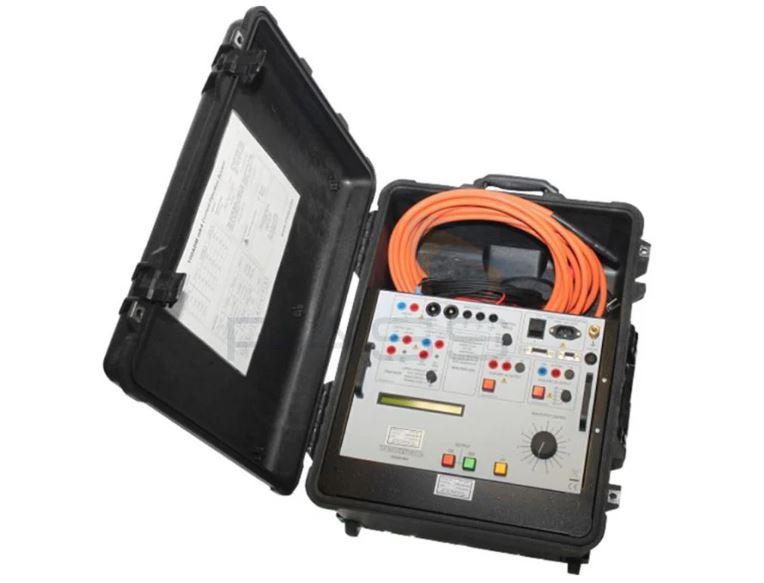
SMC PTE-100-C Pro secondary injection test is a single-phase AC/DC relay test set with a variable frequency. This portable and lightweight piece of equipment is designed for testing various types of protective relays, including electromechanical, electronic, and digital relays, as well as molded case circuit breakers (MCBs). The “Pro” version of this model includes a voltage supply module, the PTE-FCN, which is integrated into the lid of the unit and provides regulated AC voltage, frequency, and phase angle.
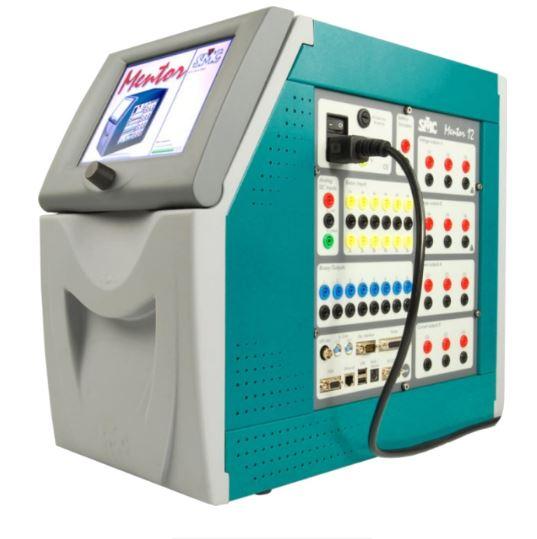
The Mentor-12 Universal Three-Phase Protective Relay Test Set. It is a versatile and modular system designed for both type and field testing of electromechanical and digital protection relays. The unit can be operated as a stand-alone device via its built-in touch screen or controlled by a PC, and its expandable “plug & play” design allows for a variety of configurations, including the ability to upgrade to up to 12 outputs. Key features include advanced test functions like Fault, Ramp, and COMTRADE transient playback, making it suitable for comprehensive analysis and simulation in power substations.
This portable unit is designed for use by commissioning and maintenance engineers to test protective relay systems. It is used for testing various types of single-phase secondary protection, including overcurrent, undercurrent, earth fault, and over/under voltage relays.