
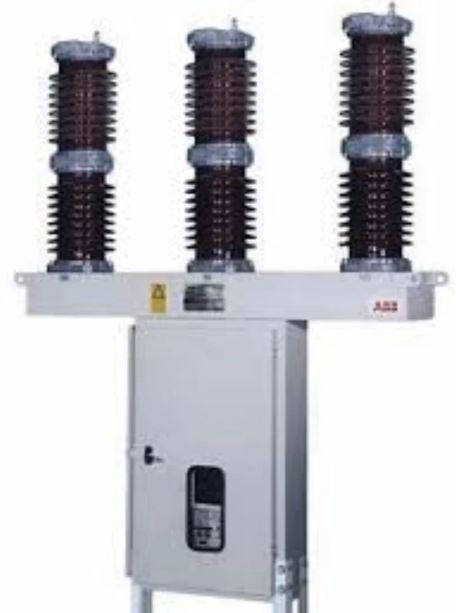
Extra High Voltage (EHV) circuit breakers are critical components in electrical power transmission systems, operating at voltages of 100 kV and above (such as 132 kV, 220 kV, 400 kV, and 800 kV), where they protect extensive grids from severe faults and ensure system stability. The predominant technology for EHV applications is the Sulfur Hexafluoride (SF₆) circuit breaker, which utilizes SF₆ gas as an superior insulating and arc-quenching medium due to its high dielectric strength (significantly higher than air or oil) and ability to rapidly regain dielectric strength after arc extinction. SF₆ breakers offer high reliability, compact size, and low maintenance requirements compared to older technologies like oil or air-blast circuit breakers, and they are capable of handling the high fault currents and demanding transient recovery voltages (TRV) characteristic of EHV systems. While highly effective, the primary drawback is that SF₆ is a potent greenhouse gas, necessitating strict handling, monitoring, and recycling procedures to mitigate environmental impact, although newer environmentally friendly alternatives are under development.
Panchkula
08048036861
+919915526408
 Chat with us
 Chat with us